


Tattoo Infection Warning Signs You Should Not Ignore
A new tattoo should look vivid, feel personal, and settle into your skin with each passing day. It should not become increasingly hot, swollen, painful, or weepy. Knowing the tattoo infection warning signs helps you act early, protect your health, and avoid mistaking a real problem for ordinary healing.
Fresh ink is an open wound before it becomes art you wear for life. In Singapore’s heat and humidity, careful aftercare matters even more: sweat, friction, unwashed hands, swimming pools, and heavy occlusive products can all complicate recovery. A premium tattoo experience is not only about the work on the day. It is about clinical hygiene, precise technique, and what happens after you leave the chair.
What Normal Tattoo Healing Can Look Like
For the first few days, mild redness close to the tattoo, tenderness, slight swelling, and a little clear or pale fluid are usually part of normal healing. The area may feel warm initially, particularly after a larger piece, a long sitting, or tattooing on sensitive locations such as the ribs, feet, inner arm, or ankle.
Around days three to seven, the tattoo may begin to dry, flake, and itch. This can look dramatic, especially with heavily saturated blackwork or colour work, but it is not automatically a concern. The key is direction. Normal healing gradually becomes less sore and less red. The tattoo may itch as the surface repairs itself, but the surrounding skin should not become increasingly angry.
Do not scratch, pick flakes, or peel scabs to reveal the ink underneath. That risks uneven healing, pigment loss, scarring, and the introduction of bacteria. Wash gently with clean hands, pat dry with a fresh paper towel, and apply only a thin layer of the aftercare product recommended by your tattoo artist.
Tattoo Infection Warning Signs to Watch Closely
An infection often announces itself through symptoms that intensify rather than fade. If you are unsure, take a clear photo in good light each day. Comparing images can make spreading redness or swelling easier to recognise than relying on memory alone.
Redness that spreads beyond the tattoo
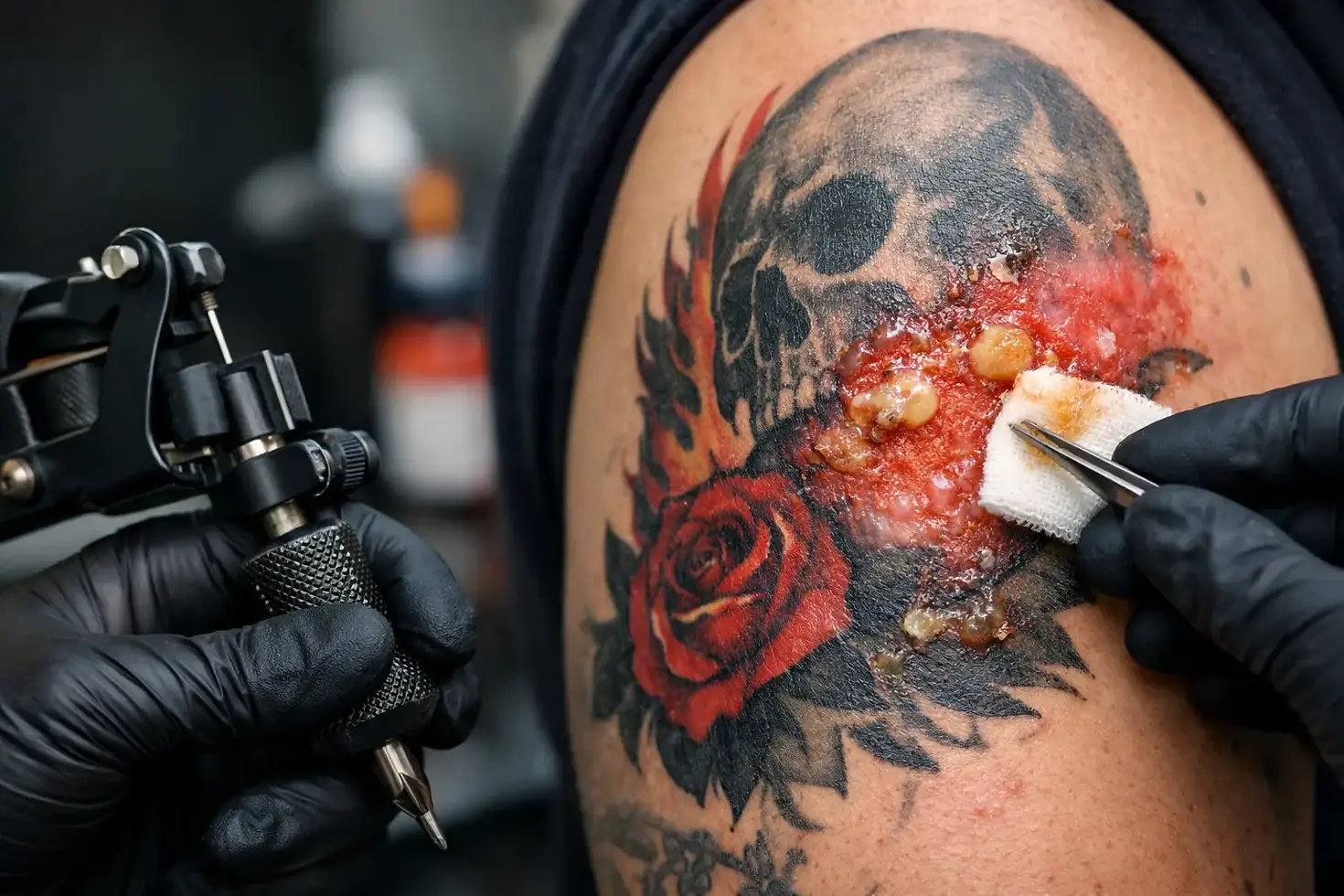
A small red halo immediately around fresh ink can be normal. Redness that expands well beyond the tattoo, deepens in colour, forms streaks, or remains pronounced after the first few days needs attention. Red lines moving away from the tattoo are particularly concerning and should not be ignored.
Pain, heat, or swelling that gets worse
A tattoo can be tender at first. It should not become more painful after it had begun to settle. Persistent throbbing, notable heat, firm swelling, or skin that feels tight and increasingly uncomfortable may signal more than routine inflammation.
Thick discharge, pus, or an unpleasant smell
Clear plasma in the early stage is different from thick yellow, green, grey, or foul-smelling discharge. Pus, excessive oozing, or a strong odour are tattoo infection warning signs that require prompt medical assessment. Do not try to treat suspected pus with extra ointment or home remedies.
Fever or feeling unwell
A tattoo issue is no longer only about the skin if you develop fever, chills, dizziness, nausea, swollen glands, or a general sense of illness. Seek urgent medical advice, particularly if these symptoms occur alongside spreading redness, discharge, or severe pain.
Blisters, sores, or a rash beyond the tattooed area
A rash can sometimes be an allergic or irritant reaction rather than an infection. Fragrance, adhesive films, a new moisturiser, or an aftercare product can trigger redness, itchiness, bumps, or blisters. The distinction matters, but it is not always obvious from appearance alone. If the reaction is extensive, painful, blistering, or affecting your breathing or face, seek medical help immediately.
Infection, Irritation, or Normal Healing?
This is where many clients get caught out. Over-moisturising can make a tattoo look soggy, shiny, and irritated. Sweat trapped under tight clothing can create a red, prickly rash. A reaction to adhesive wrap may leave a sharply outlined patch of itchy skin around the tattoo. These situations can be uncomfortable without necessarily being infections.
However, do not use uncertainty as a reason to wait. If symptoms are getting worse, there is discharge, the redness is spreading, or you feel unwell, speak to a doctor. A qualified medical professional can assess whether treatment is needed. Your tattoo artist can advise on normal aftercare and what they are seeing in the healing process, but cannot diagnose an infection remotely.
Avoid applying steroid creams, antibiotic creams, antiseptics, essential oils, or heavy petroleum-based products unless a medical professional has advised you to do so. Some products trap moisture, irritate healing skin, or make it harder to assess what is happening.
What to Do If You Suspect a Tattoo Infection
Keep the area clean and avoid touching it except when washing or applying approved aftercare. Before contact, wash your hands thoroughly. Wear loose, clean clothing that does not rub the tattoo, and avoid gyms, swimming pools, hot tubs, saunas, beaches, and communal water until the area has been assessed and properly healed.
Contact a doctor or urgent care service as soon as possible if you see the warning signs above. Bring details of when you were tattooed, when symptoms began, and any products you have used. If you have photos showing the tattoo’s progression, they can be useful. Follow medical instructions fully, even if the tattoo starts looking better quickly.
Do not attempt to drain bumps or blisters yourself. Do not cover the tattoo tightly unless instructed to do so. And do not feel embarrassed about seeking help. Fast action is the practical move, both for your wellbeing and for the quality of the healed tattoo.
Prevention Starts Before the Needle Meets Skin
The safest healing journey begins with a professional studio that treats hygiene as non-negotiable. Single-use supplies, properly prepared workstations, quality pigments, clean technique, and clear aftercare guidance are not luxury extras. They are the baseline for responsible tattooing.
At Charlotte Tattoo • Makeup. Hair, the private-suite approach is designed around focused one-to-one care, high-grade products, and disciplined hygiene standards. Nick Lim’s light-handed, minimum-bleeding technique is not simply about comfort during the appointment. Less unnecessary trauma to the skin can support a calmer, cleaner healing process when paired with correct aftercare.
Your choices matter too. Eat properly before your appointment, arrive well-hydrated, and wear clean, loose clothing that gives the artist easy access to the area. Afterward, resist the urge to show everyone by constantly touching the tattoo. Admire it, photograph it, protect it.
For the first couple of weeks, keep workouts and clothing friction in perspective. A small fine-line tattoo on the upper arm may be easy to manage with sensible care. A large thigh piece, back tattoo, or colour-packed sleeve may need more planning around sweating, sleep, travel, and work attire. Healing is not one-size-fits-all, even when aftercare principles remain the same.
The Standard Is Healing That Moves Forward
A well-healing tattoo does not need to be perfectly comfortable every hour of the day. It may itch, flake, and look temporarily dull before the final settled result appears. What it should do is improve steadily, not escalate.
Trust your instincts when something feels wrong. Clean craftsmanship, careful aftercare, and early medical support when needed give your tattoo the best chance to heal beautifully, so the statement you chose for your skin stays bold for the right reasons.


Comments