


Hair Colouring That Looks Expensive, Not Overdone
A great hair transformation should not announce itself before you enter the room. The best hair colouring has dimension, movement and a finish that makes people wonder whether you have simply always had exceptional hair. It is never just about choosing a lighter brown, richer red or brighter blonde. It is about placing colour with intention, respecting the condition of the hair, and creating a result that suits your skin tone, lifestyle and personal edge.
At Charlotte Tattoo • Makeup. Hair, colour is treated as a crafted service, not a rushed formula at a crowded salon chair. A private-suite appointment gives the consultation the space it deserves. Whether you want a soft lived-in change or a full statement shade, every decision should begin with your hair's history and end with a plan that keeps it looking polished long after you leave.
Hair colouring begins with the consultation
A colour chart can be useful, but it cannot tell the whole story. Two people may ask for the same caramel brown or smoky ash, then leave with completely different formulas because their natural base, previous colour, porosity and undertone are different. The strongest results come from a colourist who reads what is already on the hair instead of treating every head as a blank canvas.
Your consultation should cover the colours and chemical services your hair has had before, including at-home box dye, highlights, bleaching, straightening treatments and darker colour applications. These details affect both what can be achieved in one appointment and how the hair should be treated throughout the process. Honesty is valuable here. A realistic plan protects the quality of your hair and usually delivers a more beautiful result.
Lifestyle matters too. If you travel often, train daily, spend weekends outdoors or have little patience for frequent root appointments, a high-maintenance platinum blonde may not be the smartest choice. That does not mean settling for something plain. It may mean a rooted blonde, fine hand-painted highlights or a dimensional brunette that grows out with less obvious contrast.
Choose a colour direction, not a copied photograph
Reference photos are excellent for showing a mood, but they should start a conversation rather than dictate an exact outcome. Lighting, filters, extensions and styling can alter a shade dramatically. More importantly, the model's starting colour and hair density may be nothing like yours.
A skilled colourist looks at contrast first. High contrast - think bright face-framing pieces against a deep base - can feel editorial, sharp and deliberately bold. Low contrast creates a quieter luxury: espresso ribbons through dark hair, honey warmth on a brunette base, or beige blonde blended almost invisibly through the lengths. Neither is better. It depends on the statement you want your hair to make.
Skin undertone also shapes the decision. Golden, copper and caramel tones can bring warmth and softness to the complexion. Cooler mushroom browns, blue-based reds and icy blondes can create a cleaner, more fashion-forward effect, but they often require more careful upkeep. Neutral shades sit between the two and tend to wear elegantly as they fade.
Hair texture deserves equal attention. Curly and textured hair reveals colour in flashes, so strategic placement can create striking definition without colouring every strand. Straight hair displays every line of colour more clearly, which makes blending and tonal control especially important. A texture-aware cut and colour plan gives the hair shape as well as shade.
The current luxury look: dimension
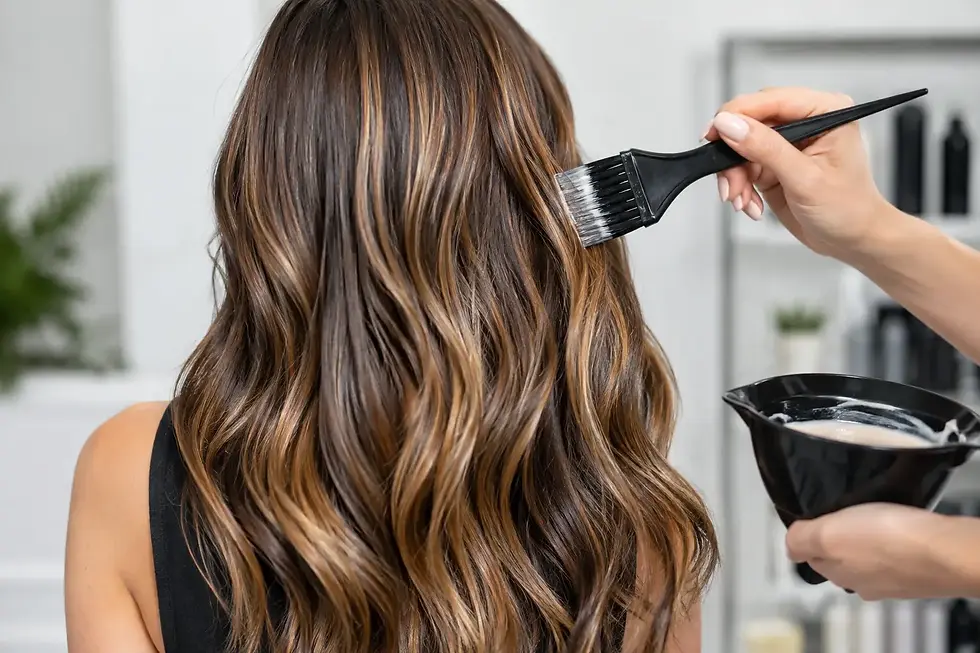
Flat, one-note colour can look severe unless that is specifically the intention. Dimension is the reason expertly coloured hair appears richer in natural light, on camera and when it moves. It is built through carefully varied tones, often using highlights, lowlights, glossing and root melting rather than a single all-over formula.
For brunettes, dimension might mean subtle cinnamon, mocha or chestnut lights placed where the hair catches daylight. For blondes, it can mean balancing brighter pieces with softer beige or pearl tones so the result does not feel striped. Red hair benefits from the same approach, with deeper copper, auburn and strawberry notes layered to give the shade depth.
This is where precision matters. Colour placement should enhance your cut, face shape and usual parting. Brightness around the face can lift your features, while darker depth underneath can make fine hair appear denser. Small technical choices create the difference between colour that is merely noticeable and colour that looks genuinely tailored.
What your hair can safely do today
The phrase “one session” is often overused in beauty. Some changes are achievable quickly, especially when the hair is untreated or the desired shade is close to the current base. Others need a staged approach. Moving from repeated dark dye to a clean, bright blonde, for example, may take more than one visit if the goal is to preserve shine, softness and strength.
That is not a compromise in expertise. It is expertise. Pushing hair beyond its sensible limit for an instant reveal can leave it looking dry, uneven or difficult to manage. A considered colour journey may involve lifting gradually, refining unwanted warmth, trimming compromised ends and using tonal glosses between larger changes. The finished result lasts better because the hair still has life in it.
Charlotte Tattoo • Makeup. Hair uses top notch professional products selected for performance and hair condition, not quick visual drama alone. The priority is controlled lift, clean tone and a finish that feels as good as it looks. Premium colour work is built on restraint as much as creativity.
The maintenance rule: protect the tone you paid for
Hair colour changes after your appointment. Water, heat, sunlight, shampoo choice and daily styling all influence how the shade wears. The aim is not to freeze it in time, but to help it fade beautifully and avoid the dullness or brassiness that can distract from the original work.
For the first couple of days, give the colour time to settle before shampooing unless your colourist advises otherwise. After that, use a colour-safe shampoo and conditioner suited to your hair type, keep water warm rather than very hot, and apply heat protection before blow-drying or using hot tools. If your blonde or cool brunette starts to look warmer than intended, a toning product may help, but it should be used thoughtfully. Overusing strong purple or blue shampoo can leave certain areas looking flat, smoky or uneven.
A gloss appointment is one of the most underrated ways to maintain expensive-looking colour. It refreshes tone, boosts shine and can soften the transition between major colouring services. For clients who love a polished finish but do not want constant lightening, it is often the intelligent middle ground.
A note on Singapore's climate
Humidity does not directly change your formula, but it can change how your hair behaves. Frizz, frequent washing and regular outdoor exposure may make colour feel less glossy between appointments. A lightweight leave-in conditioner, UV-conscious styling product and sensible heat use can make a visible difference. If you swim regularly, speak openly during your consultation so your colour plan and home care can reflect it.
Make the appointment feel like yours
Hair is part of personal style, and personal style is rarely one-dimensional. Some clients want their colour to soften a sharp haircut; others want bright panels, a deep black gloss or a dramatic contrast that carries the same conviction as their tattoos. There is room for understated refinement and unapologetic expression, provided the execution is clean.
A private appointment suits clients who value focused advice without noise, pressure or a conveyor-belt experience. You should have time to ask whether the shade will suit your wardrobe, how often it needs refreshing, whether it can be adjusted for a wedding or event, and what happens as it grows out. Those questions are not fussy. They are how you choose colour with confidence.
Bring honest reference images, share your full colour history, and be open about the maintenance you will actually enjoy. The most memorable shade is not the one that looked dramatic for one photograph. It is the one that still feels unmistakably yours when you catch it in the mirror weeks later.


Comments