


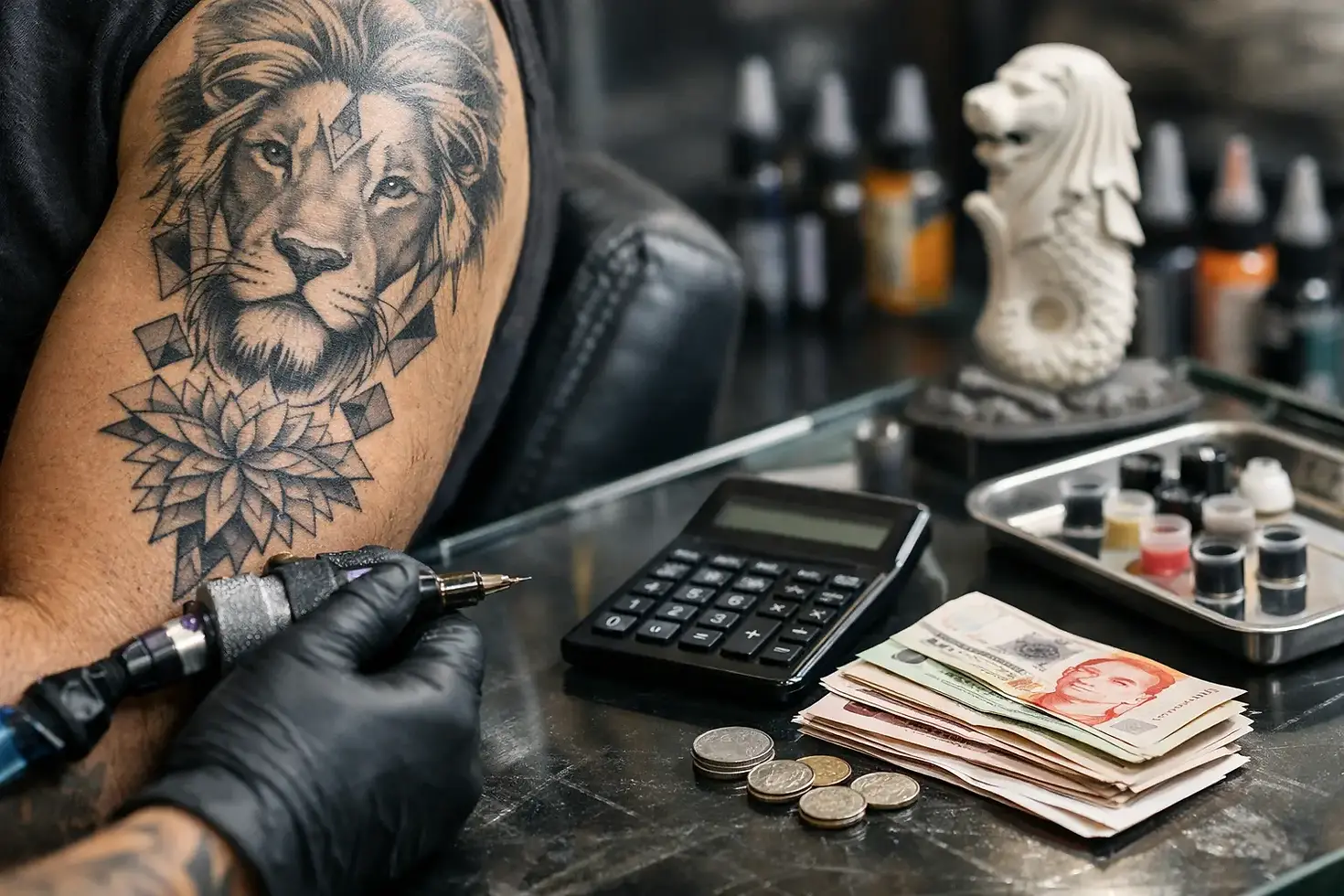
Tattoo Pricing in Singapore and What Shapes Cost
- Vivian Kuit
- Aug 10
- 5 min read
A palm-sized fine-line tattoo can look deceptively simple. Yet the difference between a rushed mark and a piece that sits cleanly on the skin for years is rarely measured in centimetres alone. Tattoo pricing reflects the hours no one sees at first glance: custom drawing, placement planning, sterile set-up, technical execution, and the care taken to protect your skin while creating something personal.
For first-timers and serious collectors alike, the right question is not simply, “What is the cheapest tattoo?” It is, “What standard of work am I paying for, and will I still love it when it has healed?”
Tattoo Pricing: What Actually Shapes the Cost
A professional tattoo is a custom service, not an off-the-shelf product. The final figure depends on the concept, scale, placement, level of detail, colour work, session length and the artist’s experience. A tiny script tattoo may require a shorter appointment, while a realistic portrait, Japanese oriental sleeve or geometric piece can demand extensive drawing, precise stencil work and multiple sessions.
Artist experience matters because skin is not paper. An accomplished artist reads body contours, understands how lines will settle, and knows when a design needs more breathing room to age well. Fine-line work, for example, asks for controlled depth and deliberate spacing. Pack it too tightly, and the details may lose their definition as the tattoo matures.
At Charlotte Tattoo • Makeup. Hair, every appointment is designed around one-to-one attention in a private-suite setting. That changes the experience as much as the result. There is time to discuss placement, refine the artwork, manage comfort and give clear aftercare guidance without the noise or pressure of a crowded shop floor.
Design complexity is not just about size
A larger tattoo is usually more expensive because it takes longer, but size is only part of the equation. A small design with dense micro-details, intricate lettering or a delicate ornamental pattern may take more concentration than a larger, bolder blackwork piece. Cover-ups can also be more demanding than fresh tattoos because the artist must work with existing pigment, skin texture and the visual weight of the old design.
Realism is often priced around the discipline involved: smooth tonal transitions, accurate facial structure, controlled contrast and enough depth for the image to remain readable. Japanese-inspired work can require the same level of planning, especially when it is built to flow across a shoulder, back or limb rather than sit as an isolated image.
Colour adds another layer. High-quality pigment, careful saturation and clean transitions take time. The best colour tattoos do not chase every shade possible. They use colour with purpose, balancing skin tone, placement and the way the design will be seen in everyday life.
Placement can change the appointment entirely
The forearm offers a relatively straightforward working surface. Ribs, sternum, feet, fingers, elbows, knees and areas close to bone are less predictable. They can be more sensitive, harder to keep still and more challenging for stencil placement. A design that wraps around the body also needs to be mapped with movement in mind, not simply placed flat.
This is why two tattoos of similar dimensions can carry very different costs. One may be a direct, single-session piece. The other may require several stencil adjustments, breaks for comfort, or a staged plan to achieve consistent saturation without overworking the skin.
A gentle technique is not a shortcut. Light-handed application, correct needle depth and disciplined pacing can help limit unnecessary trauma to the skin. That supports a cleaner healing process and protects the crispness of the finished work.
Why the Cheapest Quote Can Become the Most Expensive Choice
Low pricing can be tempting, particularly when a tattoo looks small online. But a quote that ignores design time, hygiene, quality materials or proper aftercare is not necessarily good value. Poorly placed lines, uneven shading and badly healed pigment may lead to a cover-up, laser sessions or years of avoiding an area you wanted to show with confidence.
Premium tattoo pricing should bring visible and practical value: a proper consultation, a custom design rather than a copied image, a hygienic environment, professional-grade consumables and an artist who knows how to adapt the work to your anatomy. You are also paying for judgement. Sometimes the strongest advice an artist can give is to enlarge a design, simplify a detail or choose a placement that will hold up better.
That does not mean every tattoo needs to be large or elaborate. A refined minimal tattoo can be striking precisely because it is restrained. The point is to make the design intentional, rather than forcing a trend into a budget or a body placement that does not serve it.
Ask These Questions Before You Book
A clear consultation should leave you knowing whether the tattoo is priced by session, by estimated duration or by project. It should also clarify whether a deposit is required, what it secures, how revisions are handled and whether the artist expects the work to need more than one sitting.
Bring reference images to show mood, subject matter and placement, but leave room for interpretation. The most personal tattoos are rarely carbon copies of someone else’s. Ask how the artist would adapt the concept for your skin, your proportions and the way you dress or move.
It is also sensible to discuss healing before the needle touches skin. You may need to avoid swimming, intense sun exposure and friction from tight clothing during the early stages. Keep the area clean, follow the recommended aftercare routine, and do not pick at flaking skin. A well-executed tattoo still needs a well-managed healing period to reveal its best result.
The Same Pricing Logic Applies to Hair Colour
A beautiful balayage is often mistaken for a quick colour appointment because the finished effect looks soft and effortless. In reality, premium hair colouring is built through sectioning, placement, formulation and timing. Like tattoo work, it is a technical service where the preparation determines whether the result looks expensive or merely obvious.
Hair colour pricing varies according to length, density, previous colour history, desired lift and the correction required. A virgin-hair balayage may be relatively direct, while removing uneven box dye, bands of old colour or brassiness can become a colour-correction project. The goal is not simply to go lighter. It is to preserve the hair’s condition while achieving a believable, wearable tone.
Current balayage trends favour dimension over harsh contrast. Think lived-in brunettes with caramel ribbons, creamy beige blondes with a soft root melt, or expensive-looking black hair enhanced by barely-there tonal depth. These looks often need a tailored blend of foils, freehand painting, glossing and strategic face-framing rather than one blanket formula.
The products used matter here too. Top-notch professional colour and treatment systems support more predictable lift, shine and condition, but they do not erase the limits of hair history. An expert colourist will be honest if a dramatic change needs to happen over several appointments. That approach protects the integrity of the hair and gives you a result that looks polished between visits, not only under salon lighting.
Maintenance is part of the price conversation. A high-contrast blonde may need more frequent toning and root work, while a lower-maintenance balayage can grow out gracefully with occasional glossing and conditioning treatments. The most worthwhile colour is not always the palest or boldest option. It is the one that suits your lifestyle, your wardrobe and how much upkeep you genuinely want.
Pay for Work You Can Wear Proudly
Whether you are choosing a tattoo, a cover-up or a fresh balayage, pricing should make sense in the context of skill, materials, privacy and long-term wear. Flexible payment options can make a considered decision easier, but they should never replace a proper consultation or a realistic plan.
Choose the artist or colourist who asks the right questions, protects the condition of your skin or hair, and has the confidence to refine your original idea. The best investment is not a bargain appointment. It is work that still feels like you, long after the first reveal.


Comments