


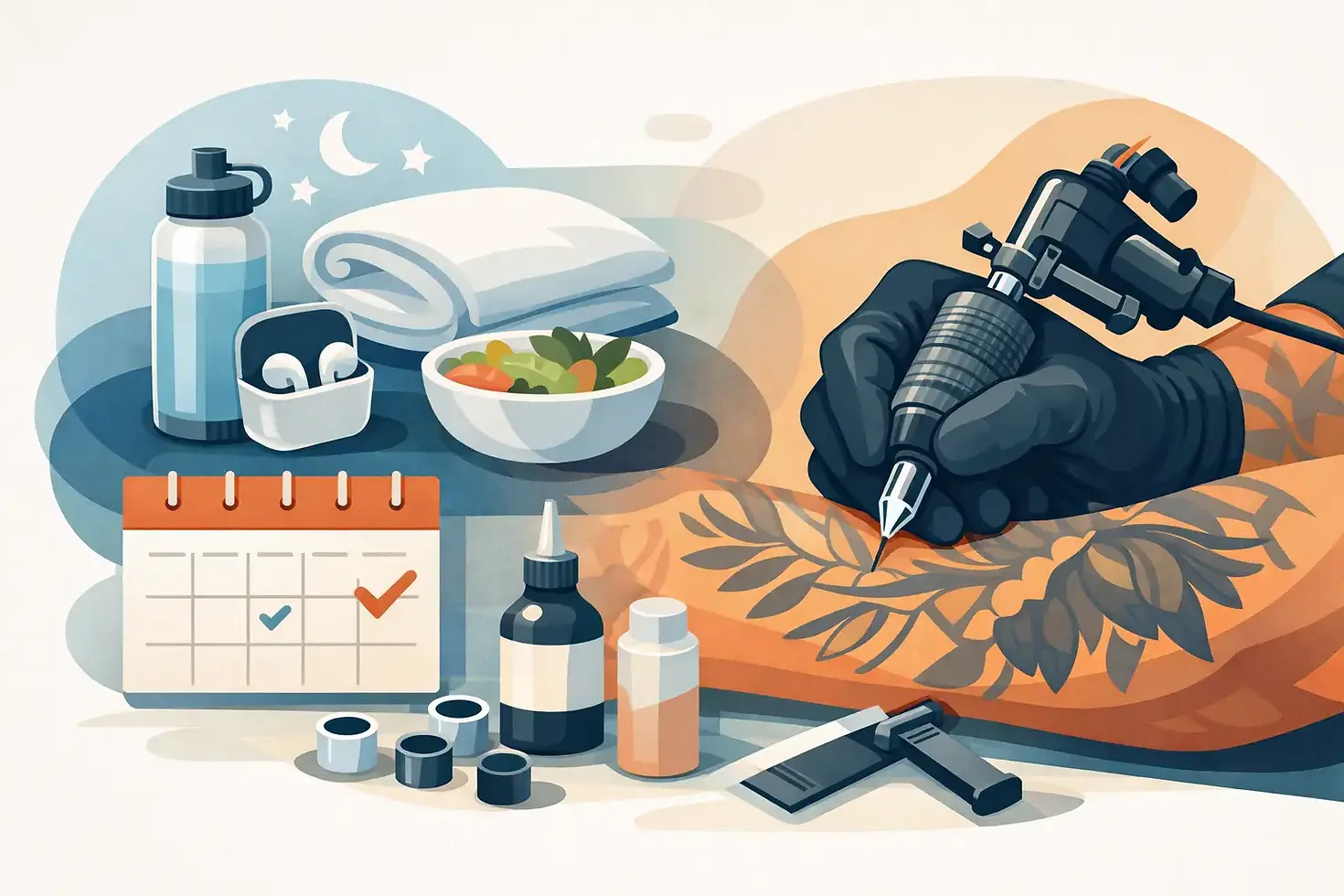
How to Prepare for Tattoo Session Properly
A tattoo appointment is not the moment to arrive dehydrated, running on kopi, and hoping adrenaline will carry you through. Knowing how to prepare for tattoo session properly gives your artist a better canvas, helps you stay comfortable, and puts you in a stronger position for clean healing. The best work is a collaboration: your artist brings technique, hygiene and design precision; you arrive rested, fed and ready.
At Charlotte Tattoo • Makeup. Hair, the experience is built around one-to-one attention rather than a crowded studio floor. That means your preparation can be as considered as the artwork itself.
How to prepare for tattoo session in the week before
Your skin is the surface that will carry the tattoo for years. Treat it well in the days leading up to your appointment. Drink water consistently, eat normally, and moisturise the intended area with a simple, fragrance-free lotion if your skin is dry. Do not apply lotion immediately before the appointment unless your artist has asked you to.
Avoid getting sunburnt, especially in Singapore’s heat. Skin that is red, peeling or irritated is not suitable for tattooing. If you have been at Sentosa, on a beach holiday, or outdoors for long stretches, protect the placement with clothing and sunscreen. A fresh tan can also alter the skin tone your artist is designing around, particularly with fine-line detail, realism and subtle shading.
Do not wax the area shortly before your session, and avoid aggressive exfoliation, chemical peels or strong active skincare on or near the placement. Shaving is usually handled by the artist where needed, under hygienic conditions. If you develop a rash, wound, infection or unusual irritation near the tattoo area, contact the studio before travelling in. Rescheduling is frustrating, but forcing a session on compromised skin is not worth the risk to healing or the final result.
If you take prescribed medication, have allergies, are pregnant, or have a health condition that may affect healing or bleeding, raise it during consultation. Never stop prescribed medicine simply for a tattoo appointment. Speak with your clinician and be transparent with your artist, so the plan is safe and realistic.
The night before: make comfort your priority
A good night’s sleep matters more than most first-time clients expect. Being exhausted can lower your tolerance for discomfort and make a long session feel longer. Aim for a normal evening, enough water and a proper meal. This is not the time for a late night out.
Avoid alcohol for at least 24 hours before your tattoo, and do not arrive under the influence of alcohol or recreational drugs. Alcohol can affect bleeding and judgement, while a calm, clear head helps you communicate accurately about placement, breaks and comfort. It also makes the consent and design process more straightforward.
Double-check your appointment time, travel route and payment arrangements. If your piece is large, complex or placed somewhere that affects movement, give yourself breathing room either side of the appointment. You do not want to rush from a demanding tattoo session straight into a meeting, gym class or long night out.
Eat, hydrate and dress for the placement
On the day, eat a balanced meal with protein and carbohydrates one to two hours before arriving. A proper breakfast or lunch helps prevent light-headedness and keeps your energy stable. Turn up hydrated, but avoid overdoing caffeine if it makes you anxious, shaky or restless.
Wear clean, loose clothing that gives easy access to the area being tattooed. For an upper arm or shoulder, a vest or loose T-shirt may work. For a thigh piece, shorts or a loose skirt can be practical. For back, rib or sternum work, ask in advance what will offer the right access while keeping you comfortable and covered.
Choose clothing you would not be devastated to stain. Professional tattooing is carefully managed, but ink, stencil transfer and ointment can mark fabric. Dark, relaxed pieces are usually the sensible choice. Bring a light layer too, as some clients feel chilly during longer sessions.
For appointments lasting several hours, pack a small snack, water and headphones if you like music or a podcast. Your artist will guide the pace, but short breaks can help you reset. Do not bring a large entourage. A private appointment works best when the room stays focused, calm and hygienic.
Pain is manageable when you plan for it
Pain is personal. A tiny fine-line tattoo on the outer arm can feel very different from a full-day rib, sternum, foot or inner-bicep session. Placement, size, your sleep, stress level and even the day you are having can influence how it feels.
Do not try to prove anything by sitting in silence. If you need a pause, say so early. The aim is controlled, quality tattooing, not an endurance contest. Slow breathing, a relaxed jaw and unclenched hands make a genuine difference, particularly when the work moves into more sensitive areas.
Avoid numbing creams unless they have been specifically discussed with your artist. Some products can change how skin behaves, interfere with stencil application or create uneven results. A skilled artist will have a process for comfort that respects both your skin and the integrity of the work.
Arrive ready for a precise design decision
A consultation is where ideas become a tattoo that fits your anatomy and still feels right years from now. Bring clear visual references, but do not expect an exact copy of another person’s work. The strongest custom tattoo uses your references for direction, then adapts composition, line weight, scale and flow for your body.
Before the stencil goes on, be honest about your non-negotiables. Is it the placement, the subject, the level of detail, or how visible the tattoo is at work? This is the moment to ask questions. Once tattooing begins, major design changes are no longer simple.
For cover-ups, manage expectations with patience. Old pigment, scar tissue and the darkness of the existing piece affect what is possible. Sometimes a larger, bolder concept is the most elegant route. A veteran artist will advise on the trade-off between concealment, detail and long-term clarity rather than promising a result skin cannot support.
If you are pairing ink with hair colour or balayage
A polished transformation may include fresh ink and a fresh colour, but do not stack two demanding appointments carelessly. Hair colouring and balayage can involve lengthy processing, scalp sensitivity and time in a salon chair. Tattooing can involve extended stillness too. If both services are booked close together, tell the studio so your schedule can be planned with comfort in mind.
For a hair appointment, arrive with hair that is clean but not freshly scrubbed to the point your scalp feels tight or irritated. Avoid scratching, heavy scalp oils and harsh treatments beforehand. Be upfront about previous bleach, home colour, keratin services or dark box dye. These details affect lift, tone and the realistic path to your desired shade.
Balayage remains a smart choice for clients who want lightness with a softer grow-out. Its hand-painted placement can be tailored around your haircut, complexion and lifestyle, from refined caramel ribbons to cooler beige dimension. But a dramatic shift from dark hair to bright blonde may need more than one session to protect the condition of the hair. Premium colour is not about rushing the bleach. It is about keeping shine, strength and tone intact.
If you are getting tattooed near the neck, behind the ear or along the upper back, consider the timing of fresh hair colour. Colour products, heat styling and frequent washing should not complicate a new tattoo’s aftercare. Your artist and beauty professional can help sequence the services sensibly.
Leave with an aftercare plan you can follow
Aftercare starts when you walk out, not the next morning. Listen to the specific instructions given for your tattoo, as healing advice can vary slightly by placement, size and protective dressing. Keep the area clean, do not pick flaking skin, and avoid soaking it in pools, sea water, baths and hot tubs while it heals. Loose clothing reduces rubbing, and protecting the healed tattoo from sun exposure helps preserve contrast and pigment.
Skip heavy workouts for the first stage of healing if sweat, friction or stretching will affect the placement. A calf tattoo and a rib tattoo have different practical challenges, so ask rather than guess. If something looks unusually painful, swollen or concerning, seek professional medical advice promptly.
Your preparation does not need to be complicated. Arrive rested, nourished, honest about your health and clear about the design you want. That gives your artist the space to do what great tattooing demands: place every line with intention, and create work you will be proud to wear long after the appointment ends.


Comments