


Foils Versus Balayage: Which Suits You Best?
A beautiful colour appointment is not about choosing the trendiest technique on a salon menu. It is about deciding how you want your hair to catch the light, grow out, photograph and feel every morning. In the foils versus balayage conversation, the right answer depends on your natural base, previous colour, lifestyle and appetite for contrast.
At Charlotte Tattoo. Makeup. Hair, colour is treated like detail work: intentional placement, controlled processing and a finish built around the individual. Whether you want a sharp, luminous blonde or soft dimensional brunette ribbons, the technique matters as much as the shade.
Foils versus balayage: the real difference
Foils and balayage can both create lift, dimension and a more expensive-looking finish. They are not, however, interchangeable. The biggest distinction is how the lightener is applied and processed.
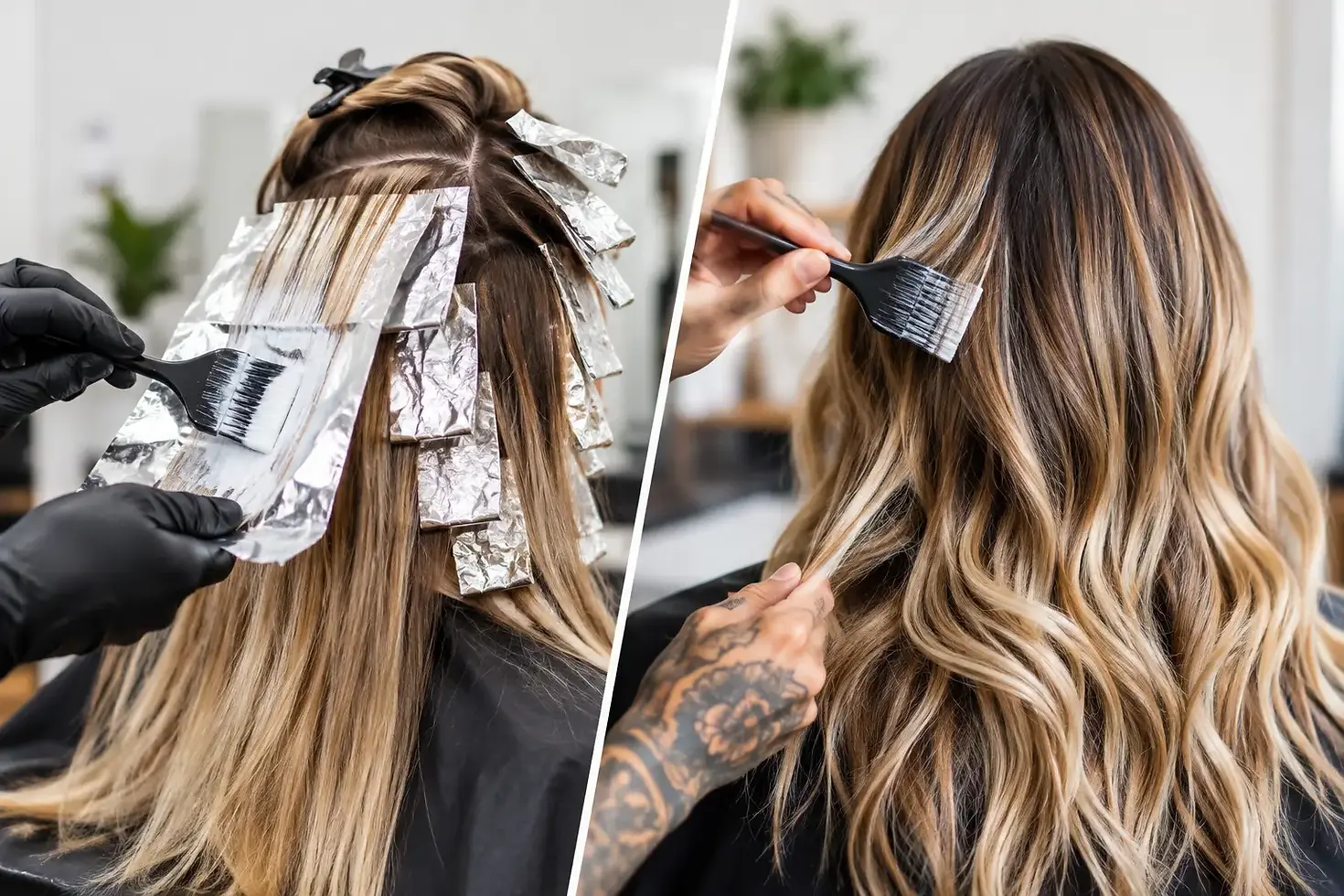
With foils, selected sections are wrapped in foil after colour or lightener is applied. The enclosed environment holds warmth and moisture around the hair, allowing for stronger, more predictable lift. This makes foils the precision tool for clients who want visible brightness, clean highlights, or a significant shift away from a darker natural colour.
Balayage is hand-painted across the surface of the hair, usually leaving more depth at the root and around selected internal sections. It is designed to imitate the irregular, softly sunlit variation that hair can develop naturally. The finish is more diffused, particularly at the root, with no obvious stripe of highlight.
Neither method is automatically kinder, more fashionable or more luxurious. The skill lies in using the right amount of lift, the correct developer, considered placement and premium professional products that respect the condition of your hair.
Choose foils when brightness is the brief
Foils are for impact with discipline. If you want to see a clear change after one appointment, foils are often the stronger option. They can create fine, delicate babylights, chunky high-contrast panels, a full blonde transformation, or a refined lift through darker hair.
They are particularly effective when your goal is to move through warm underlying pigment towards a cooler or lighter result. Because the hair processes inside each foil, your colourist can work with greater consistency and control. That matters when you want an even blonde, a crisp face frame, or highlights that begin closer to the root.
Foils also give grey hair less room to hide. Fine foiled highlights can blend silver regrowth into a lighter overall direction, making the transition appear softer between appointments. For clients who want intentional grey blending rather than an all-over block colour, this can be an elegant middle ground.
The trade-off is maintenance. A foil result placed close to the scalp may show regrowth more clearly than a lived-in balayage. Depending on your contrast level and haircut, many clients prefer a refresh around every eight to 12 weeks, with a toner or gloss appointment in between if needed.
Choose balayage for softness and a lower-maintenance grow-out
Balayage earns its reputation for relaxed glamour because it works with shadow. Your natural root becomes part of the design rather than something to conceal immediately. The colour is concentrated through the mid-lengths and ends, with strategically painted brightness around the face where it makes the greatest visual difference.
This is why balayage suits clients who want their hair to look polished without needing a frequent root appointment. It can be especially flattering on brunettes and dark blondes who want movement but do not want to lose their depth. A well-executed balayage grows out softly because there is no hard line of colour at the scalp.
That said, balayage is not always the fastest route to very pale blonde. Open-air painting usually develops more gently than hair enclosed in foil. If your hair is naturally deep, previously coloured, or you are aiming for a dramatic icy result, your colourist may recommend foilyage instead. This hybrid approach uses hand-painted placement with foil processing to deliver both blend and lift.
Balayage appointments can be spaced further apart, often around 12 to 16 weeks for a full refresh. A gloss, root melt or subtle face-frame adjustment between larger appointments can keep the tone expensive rather than faded.
Your hair history changes the answer
The most useful consultation question is not, “Which technique is better?” It is, “What has your hair been through?” Old box dye, accumulated permanent colour, uneven highlights, chlorine exposure and heat styling can all influence how hair lifts.
Virgin hair may lift cleanly and predictably, but existing artificial colour does not lighten in the same way. If you have coloured your hair dark for years and want a luminous blonde, a controlled multi-session plan is often the most polished route. Pushing too hard in one sitting can compromise softness, shine and the quality of the final tone.
Texture matters too. Fine hair can look beautifully full with delicate foils or carefully painted ribbons, while thick hair may need more internal dimension to avoid a heavy, flat block of colour. Curly and coily hair benefits from placement that considers how the pattern expands and where light naturally lands once dry. The best result is never copied blindly from a reference photograph.
The current colour direction: blended, but not boring
The latest colour mood is polished dimension. Clients are moving away from flat, single-process shades and overly stripy highlights in favour of blended contrast that still reads clearly in photos. Think expensive brunette with caramel ribbons, creamy beige blonde with a rooted melt, or a cool mushroom brown with whisper-fine highlights.
The face frame remains a powerful detail, but the modern version is softer and better integrated. Instead of two stark pale pieces at the front, the brightness flows into the surrounding layers. This creates lift around the complexion without making the colour look disconnected from the rest of the hair.
For this reason, the foils versus balayage choice is increasingly a false either-or. Many premium results combine methods: foils where extra lift is essential, balayage through the lengths for softness, and a gloss to bring every tone into the same refined family.
Maintenance is part of the colour design
A colour service does not end when you leave the chair. The way you wash, dry and style your hair protects the investment in shine and tonal clarity. Use salon-quality, colour-safe shampoo and conditioner, wash with lukewarm rather than very hot water, and apply heat protection before blow-drying or using hot tools.
Blondes and cool-toned brunettes may benefit from occasional violet or blue-toning care, but restraint matters. Overusing heavily pigmented shampoo can leave porous areas looking dull or slightly over-toned. Your colourist should advise how often it suits your exact shade and hair condition.
If you swim regularly, wet your hair with clean water first and use a protective leave-in product where appropriate. Sun, pool water and frequent high heat can pull a fresh gloss towards unwanted warmth. A hat on bright Singapore afternoons is not only chic, it is practical colour aftercare.
What to ask at your appointment
Bring reference images, but use them as a direction rather than a demand. Show examples of what you like and, just as usefully, what you do not like. Mention how often you are willing to return, whether you heat-style daily, and whether you prefer warm honey tones, neutral beige, smoky ash or richer brunette depth.
Ask what is achievable in one session, what maintenance will look like, and whether your desired shade needs foils, balayage or a combination. A confident colourist will be clear about the journey, not promise a filter-perfect result at the expense of your hair’s condition.
The best colour is the one that still feels like you, only sharper: bright where you want attention, dimensional where you want movement, and considered enough to look good long after the appointment. Choose the technique that serves that vision, then give it the care it deserves.


Comments