


Best Tattoo Placements for Healing That Work
- Vivian Kuit
- Jul 21
- 6 min read
A fresh tattoo can look immaculate when you leave the suite, then become harder work because your sleeve rubs it all day, your gym routine stretches it, or Singapore humidity keeps it too warm. The best tattoo placements for healing are not simply the least painful spots. They are the areas you can keep clean, protected and relatively still while the skin settles.
That distinction matters. A brilliantly designed tattoo deserves a placement that supports crisp lines, smooth pigment retention and a calm healing period, rather than one that turns every shower, outfit and night’s sleep into a negotiation.
Healing starts with anatomy, not luck
No tattoo placement guarantees perfect healing. Your skin, overall health, sleep, aftercare, exposure to sweat and sun, and the quality of the tattoo application all have a role. Still, placement changes the equation dramatically.
The easiest areas tend to have a decent layer of soft tissue, less constant bending, and clothing that can sit loosely over the top. They are also places you can see and reach, which makes proper cleansing and moisturising far more realistic. A tattoo you cannot comfortably inspect is a tattoo you may accidentally neglect.
For larger work, think beyond the first week. The right placement should suit how you work, train, dress and travel. A detailed piece may be technically possible almost anywhere, but an experienced artist will ask whether that location gives the artwork and your healing process the best chance to perform.
Best tattoo placements for healing
Outer upper arm
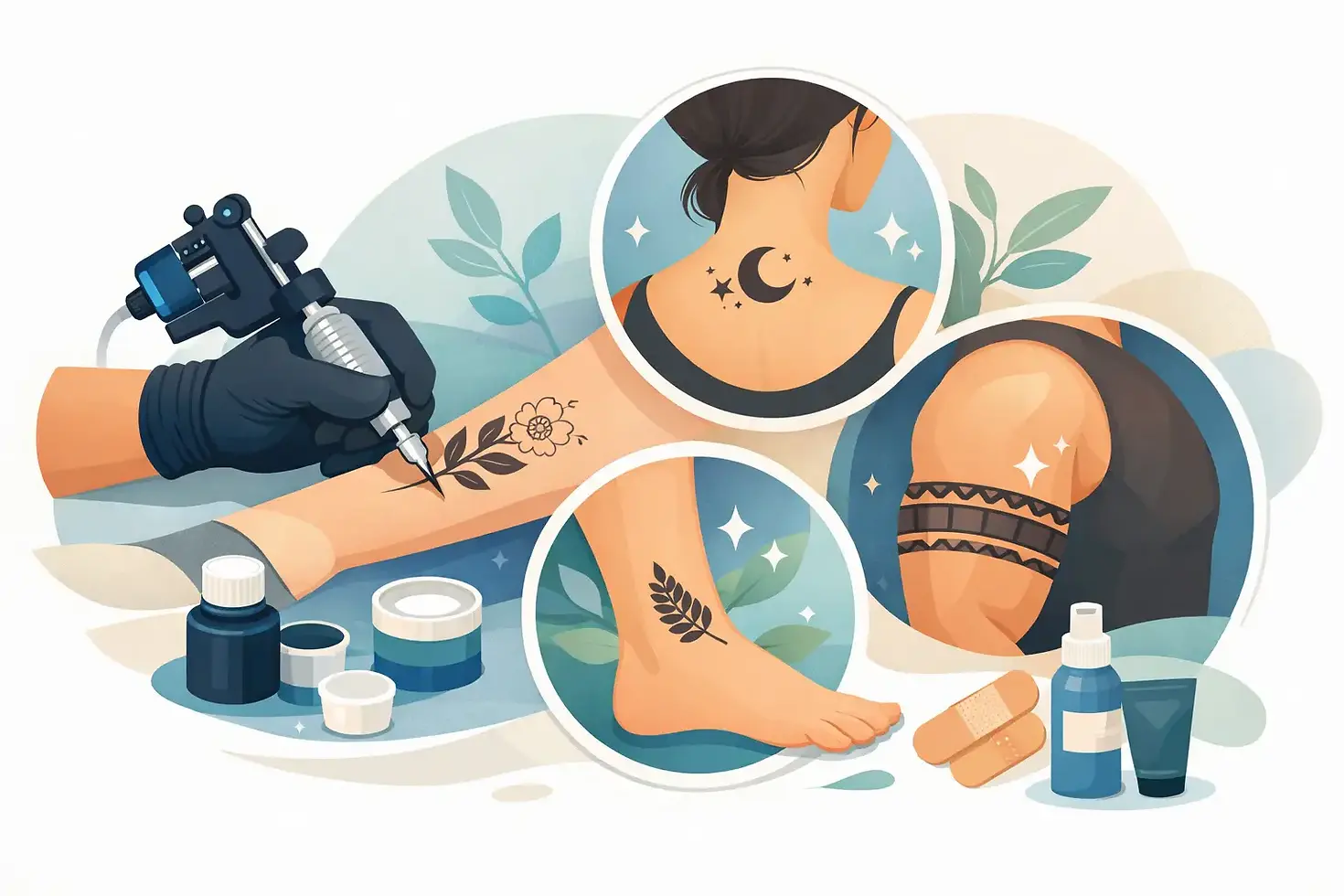
The outer upper arm is a strong choice for first tattoos and seasoned collectors alike. It is usually straightforward to clean, easy to keep out of direct friction, and less affected by daily movement than a joint. It also offers enough space for fine-line florals, portraits, ornamental designs or a statement custom piece without forcing the composition to become too small.
The trade-off is sun. Short sleeves expose the area quickly, especially during Singapore’s bright afternoons. A fresh tattoo should be covered with loose, breathable fabric rather than coated in sunscreen during the initial healing stage. Once fully healed, high-factor sun protection is non-negotiable if you want the tattoo to stay sharp.
Outer thigh
The outer thigh is one of the most forgiving canvases for healing and scale. There is generous room for a larger composition, the skin is relatively stable, and you can usually avoid rubbing by choosing relaxed shorts, skirts or trousers. It is particularly useful when you want meaningful detail without placing it on a high-impact area.
However, your wardrobe decides whether this is truly low-friction. Tight denim, cycling shorts and fitted workwear can create constant pressure. Plan for a week or two of softer, looser clothing before booking.
Shoulder and upper back
The shoulder cap and upper back offer excellent space for flowing designs, especially pieces that need movement in the composition without being disrupted by an actual moving joint. These placements are often sheltered from the sun and less likely to encounter daily knocks than forearms or shins.
Their weakness is access. Washing and applying a thin layer of aftercare product can be awkward, so you may need a clean pair of hands to help. Sleep can also be challenging if the tattoo sits exactly where your body rests against the mattress. A slight adjustment in the design placement can make a major difference.
Calf, with sensible expectations
The outer calf can heal well because the design is easy to view and generally avoids the crease of a joint. It suits vertical compositions, illustrative work and designs that benefit from a naturally elongated canvas.
Yet lower legs are not automatically easy. They can swell after long days standing, flying or exercising, and socks or tight footwear may rub nearby. If you commute on foot, play sport or are about to take a long-haul trip, consider timing the appointment for a quieter period.
Placements that need more discipline
Difficult does not mean off-limits. Hands, fingers, feet, ankles, elbows, knees, ribs, waistbands and inner thighs can produce striking tattoos. They simply require a more deliberate decision, a design suited to the location and stricter aftercare.
Joints are in motion all day, which can make tightness and scabbing more uncomfortable. Hands and fingers receive relentless washing, friction and sunlight, while feet face socks, shoes and sweat. Fine details in these areas may soften or fade sooner, sometimes requiring a touch-up after full healing.
The ribcage and side torso are visually powerful but can be affected by breathing, sleeping positions and restrictive clothing. Areas beneath bra bands, watch straps, backpack straps or waistbands are also worth assessing honestly. If an item rubs that exact spot every day, it can irritate healing skin no matter how carefully you cleanse it.
This is where a private consultation earns its place. The best choice is often a few centimetres away from where you first imagined it. That small shift can improve comfort, preserve the artwork’s shape and make the healing period far less dramatic.
Match the design to the body part
Placement should support the design rather than merely accommodate it. Fine-line work needs enough calm, even skin to keep its delicacy readable. Realism needs breathing room and a placement that does not distort heavily with movement. Larger Japanese-inspired compositions and body-flow designs should follow muscle lines and natural contours instead of fighting them.
A good tattoo artist considers how the piece will look when you stand, sit, reach, gain muscle or simply move through daily life. The goal is not to freeze the body. It is to create work that belongs to it.
At Charlotte Tattoo • Makeup. Hair, the appointment-only setting gives this conversation proper time. A placement is assessed for composition, skin condition, movement, lifestyle and healing practicality, not chosen in a rush between walk-ins. Precision is not only about the tattooing itself. It starts before the stencil touches skin.
Singapore heat changes the healing plan
Heat and humidity do not stop anyone from getting tattooed, but they make aftercare less casual. Sweat, prolonged moisture and tightly covered skin can cause irritation, particularly during the first few days. Choose clean, breathable clothing, skip swimming and sauna sessions, and avoid workouts that drench or repeatedly rub the tattoo while it is fresh.
Clean hands first, then wash the tattoo gently using the aftercare instructions provided. Pat it dry rather than rubbing. Apply only a very thin layer of the recommended product - more cream is not better if it leaves the skin soggy. Never pick flakes or scabs, even when the tattoo enters the itchy stage.
If redness spreads, pain intensifies, the area feels unusually hot, or you notice concerning discharge, seek medical advice promptly. Normal healing can include mild tenderness, peeling and itchiness. Guesswork is not premium aftercare.
Fresh ink, fresh colour: plan the whole look
A tattoo appointment and a hair colour refresh can both be moments of reinvention, but they need sensible scheduling. Your tattoo needs a calm start, especially if it is on the shoulder, upper back or neck where salon capes, rinsing and styling tools may brush the area. Ideally, complete your hair colouring before a tattoo in one of those zones, or wait until the tattoo is fully settled before booking an intensive colour service.
For tattoos on the arm or thigh, hair appointments are usually easier to manage, but comfort still comes first. Let your stylist know about fresh ink so they can avoid unnecessary contact and keep products away from healing skin. Clinical hygiene, clean capes and top-notch products should be standard, not an upgrade.
Current colour direction is moving towards expensive-looking dimension rather than obvious striping. Soft balayage, warm brunette glosses, copper ribbons and softly blended beige tones all work beautifully with custom ink because they add polish without competing for attention. The strongest overall look has a point of view: a delicate botanical tattoo paired with luminous, low-maintenance balayage feels refined; a bold geometric piece with a high-gloss darker colour feels sharper and more editorial.
There is also a practical advantage to planning both services. If you are having a major colour correction, bridal styling or an event makeover, arrange tattoo timing so your skin is not still peeling or tender in the photographs. Great personal style is not about doing everything at once. It is about giving each transformation the conditions to look its best.
Choose the placement you can protect
The smartest tattoo placement is the one that fits your real routine, not an imaginary version of it. Be honest about training, uniforms, holidays, sun exposure, sleep and the clothes you reach for every morning. A well-placed tattoo heals with fewer obstacles, holds its detail with more confidence and becomes part of your style with zero regrets.
Give the artwork room, give your skin time, and let the final placement be as intentional as the design itself.


Comments