


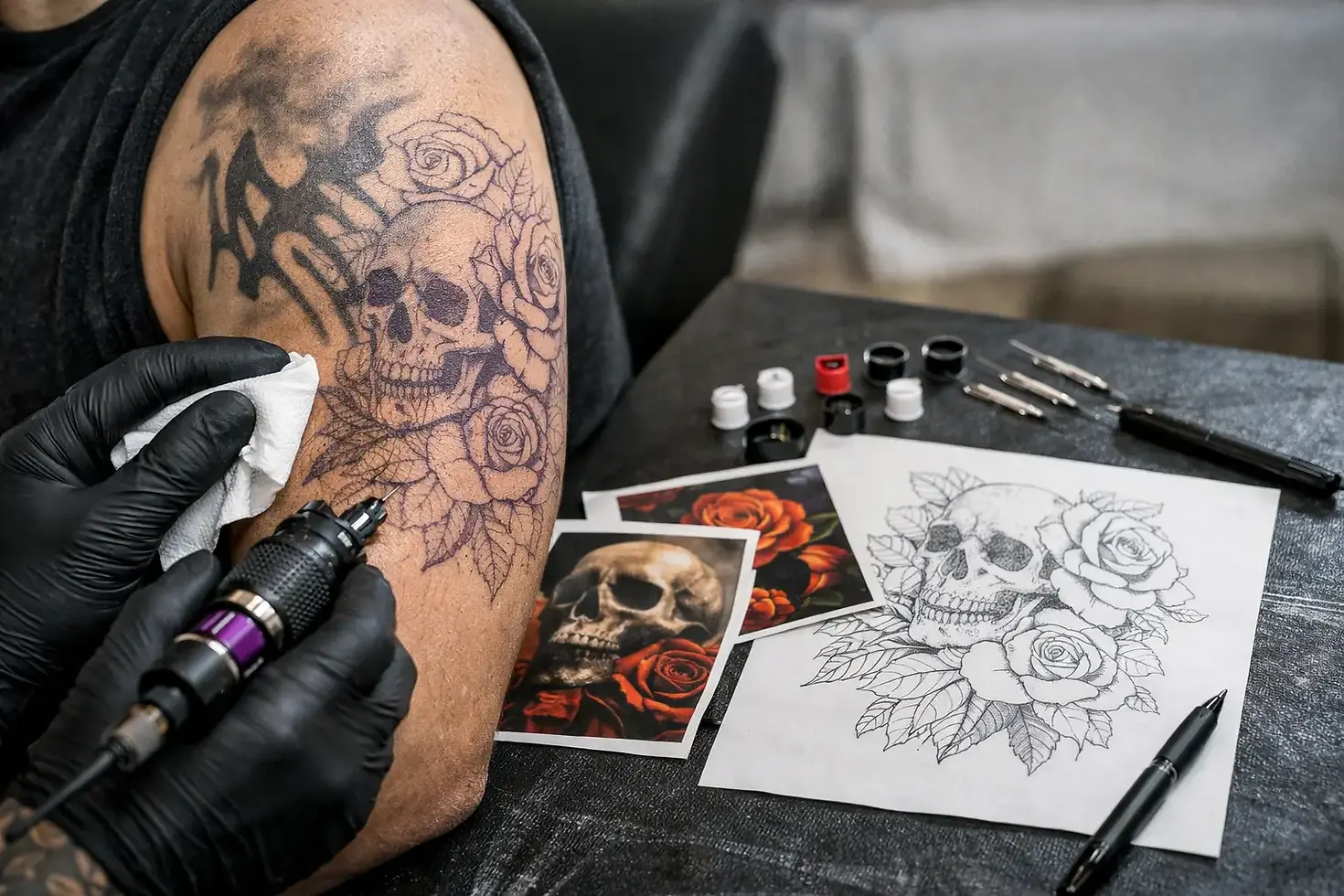
A Guide to Tattoo Cover Up Planning That Works
That old tattoo does not need to dictate what comes next. But a successful cover-up is not a case of placing a larger, darker image over the top and hoping for the best. It is a considered redesign of skin, pigment, placement and proportion. This guide to tattoo cover up planning is for anyone who wants a refined result rather than a rushed fix.
At Charlotte Tattoo • Makeup. Hair, cover-up work begins with a private, honest consultation. The aim is not merely to hide old ink. It is to create a piece you would choose even if the original tattoo had never existed.
Start Your Tattoo Cover Up Planning With the Truth
The strongest cover-ups start with a clear assessment of what is already on the skin. Age, colour, saturation, line weight, scarring and placement all influence what can be achieved. A faded fine-line tattoo may offer far more freedom than a dense black tribal design, while old red, blue or green pigment can behave differently beneath new ink.
Photographs are useful for an initial conversation, but they cannot replace seeing the tattoo in person. Skin texture, raised areas and the true depth of old pigment are easier to assess under proper lighting. An experienced artist will tell you where the limits are, not sell you an unrealistic promise.
That honesty matters. Sometimes a client arrives wanting a tiny, delicate cover-up over a large dark design. It may be possible to soften the old tattoo with a strategic composition, but it is rarely possible to make heavy ink disappear beneath pale, sparse linework. Good planning protects you from spending money on a result that will not wear well.
Think Beyond “Cover It”
The best cover-up question is not, “What can go over this?” It is, “What do I want to wear on this part of my body for years?” A cover-up needs visual authority. It should have enough movement, contrast and depth to redirect the eye away from the old work.
Florals, animals, ornamental patterns, Japanese-inspired compositions, blackwork, realism and abstract forms can all work beautifully. The right direction depends on the existing tattoo and your personal style. A peony may use layered petals and shadows to absorb an old outline. A raven or tiger can use natural areas of dark fur or feathers. Geometric work can be effective, although it demands exact placement and thoughtful density because straight lines reveal every compromise.
Do not choose a design only because it is known to cover tattoos. Choose an image that still feels like you. A cover-up is a chance to edit your visual story with more confidence, not to swap one regret for another.
Size is often the necessary trade-off
In many cases, the new tattoo needs to be larger than the existing one. This is not an artist trying to inflate the project. It allows the new composition to break up the boundary of the old tattoo, rather than creating a dark patch with a visible shape beneath it.
A well-designed cover-up can feel lighter and more intentional than the tattoo it replaces, even when it occupies a larger area. Placement, negative space and flow around the body make a significant difference. A design that follows the shoulder, forearm, thigh or back can look naturally placed instead of simply pasted over a problem.
Colour, Contrast and the Reality of Old Ink
Tattoo pigment does not act like paint on a blank canvas. New ink sits in the skin above and alongside old pigment, so colours visually interact rather than fully replace one another. Light colours generally cannot cover dark ink. White ink is not an eraser. Beige or skin-toned ink is not a reliable correction method and can heal unpredictably.
Dark values are usually the foundation of a cover-up, but that does not mean the finished piece must be solid black. A skilled artist can use controlled shading, background texture and carefully placed contrast to disguise old sections while preserving breathing room elsewhere. The goal is depth, not a blunt block of darkness.
Colour may still have a place. Deep reds, rich greens and blues can support certain concepts, but their effectiveness depends on the original pigment and your skin tone. This is one reason custom design matters more than copying a reference image from social media. What looks clean on unmarked skin may not perform the same way over an old tattoo.
When Laser Lightening Makes Sense
Laser lightening is not compulsory for every cover-up, but it can expand your options. A few sessions may reduce the density of stubborn black areas enough for a more detailed, lighter or less oversized design. It can be especially worth considering if you have very dark, saturated ink and want a cover-up with fine detail or more open space.
There is a trade-off: laser treatment takes time, costs money and requires full skin recovery before tattooing. Planning on patience here is wiser than forcing a design before the skin is ready. The exact number of sessions varies greatly according to pigment, tattoo age, depth and your skin’s response.
If you choose this route, allow your tattoo artist to assess the healed result after each stage rather than deciding the final design too early. The skin may reveal more possibilities once the old ink has lifted.
Choose an Artist for Cover-Up Skill, Not Just a Style Feed
A beautiful portfolio is not automatically a cover-up portfolio. Look for healed cover-up work, not only fresh photographs taken under flattering studio lights. You want to see whether old lines remain visible after healing, how the artist handles dark sections and whether the finished design still has clarity at a normal viewing distance.
Cover-up work requires technical judgement as much as drawing ability. The artist needs to understand pigment layering, body flow, skin condition and how a design will settle over time. It also requires restraint. Adding too much black too quickly can create a heavy result that ages poorly; adding too little can leave the old tattoo showing through.
At a private-suite appointment, you should have the space to discuss what you dislike about the existing tattoo, what you want the new work to express and any concerns about pain or healing. This is personal work. It deserves more than a five-minute decision at a crowded counter.
Plan for Healing Before the Needle Touches Skin
Cover-ups can involve larger areas, heavier saturation or longer sessions, so aftercare is part of the design plan. Arrange your schedule so you can avoid friction, intense exercise, swimming, prolonged sun exposure and tight clothing while the tattoo heals. If the piece is on a high-movement area such as the elbow, wrist or ankle, accept that healing may require extra patience.
Follow your artist’s specific aftercare instructions, keep the area clean and use only the recommended professional aftercare products. Do not pick flakes, scrub the tattoo or test internet remedies. Your skin is doing the work of securing the pigment, and careless aftercare can compromise an otherwise excellent cover-up.
A useful fun fact: a tattoo can appear darker and sharper when fresh, then look temporarily dull or cloudy during healing. That stage is normal. Judge the result only once the skin has properly settled, not during the first few weeks.
Bring References, Then Leave Room for Expertise
Bring images that show the mood, subject matter and level of detail you like. Also bring a clear photo of the tattoo you wish to cover. References help communicate your taste, but the final concept should be drawn around your body and the specific marks already there.
Be open about non-negotiables. Perhaps you want to avoid skulls, you dislike dense blackwork, or you need a design that can sit discreetly beneath workwear. Equally, be open to the artist changing the scale, angle or composition. Those adjustments are often the difference between an adequate disguise and a tattoo with real presence.
A cover-up should not feel like an apology written on the skin. Give the planning the time it deserves, choose craftsmanship over shortcuts, and let the next tattoo become the one you are genuinely proud to show.


Comments